%20.png)
Beyond Steroids: Alternative Topical Treatments That Actually Work
- Feb 10
- 15 min read
Updated: Mar 6
By Diane Angela Fong. ND

As a naturopathic doctor who specializes in eczema, I’ve worked with many patients stuck in the same frustrating cycle: Apply a steroid. Skin improves. You stop. Skin flares. Repeat.
Topical steroids can be very effective for calming inflammation in the short term. But for many families, the bigger question becomes: What happens next?
More and more people are looking for strategies that support long-term skin health, not just temporary suppression. The good news is that evidence-based, steroid-sparing options do exist. When chosen thoughtfully and tailored to the individual, they can calm inflammation, strengthen the skin barrier, and support lasting improvement.
In the images above, you’ll see what can happen when we address eczema strategically, supporting both the skin and the internal drivers behind it. In this case, inflammation visibly calmed within 14 days. I’ll walk you through what we did and why it made a difference.
Limitations of Conventional Treatments
Topical Corticosteroids
Topical corticosteroids (steroid creams) are very effective for calming eczema flares. They are often the first treatment doctors prescribe because they can quickly reduce redness, itching, and inflammation.
Large research reviews confirm that stronger steroid creams are among the most effective treatments for improving visible eczema symptoms. [1–2] However, it’s important to understand how they work.
Steroids suppress inflammation. They calm the immune response in the skin. But they do not address the underlying reasons why the inflammation started in the first place.
For many patients, this leads to a frustrating cycle: Apply → improve → stop → flare → repeat.
Over time, there are also potential concerns to consider:
Skin thinning (atrophy) with prolonged use
Worsening of symptoms after stopping treatment
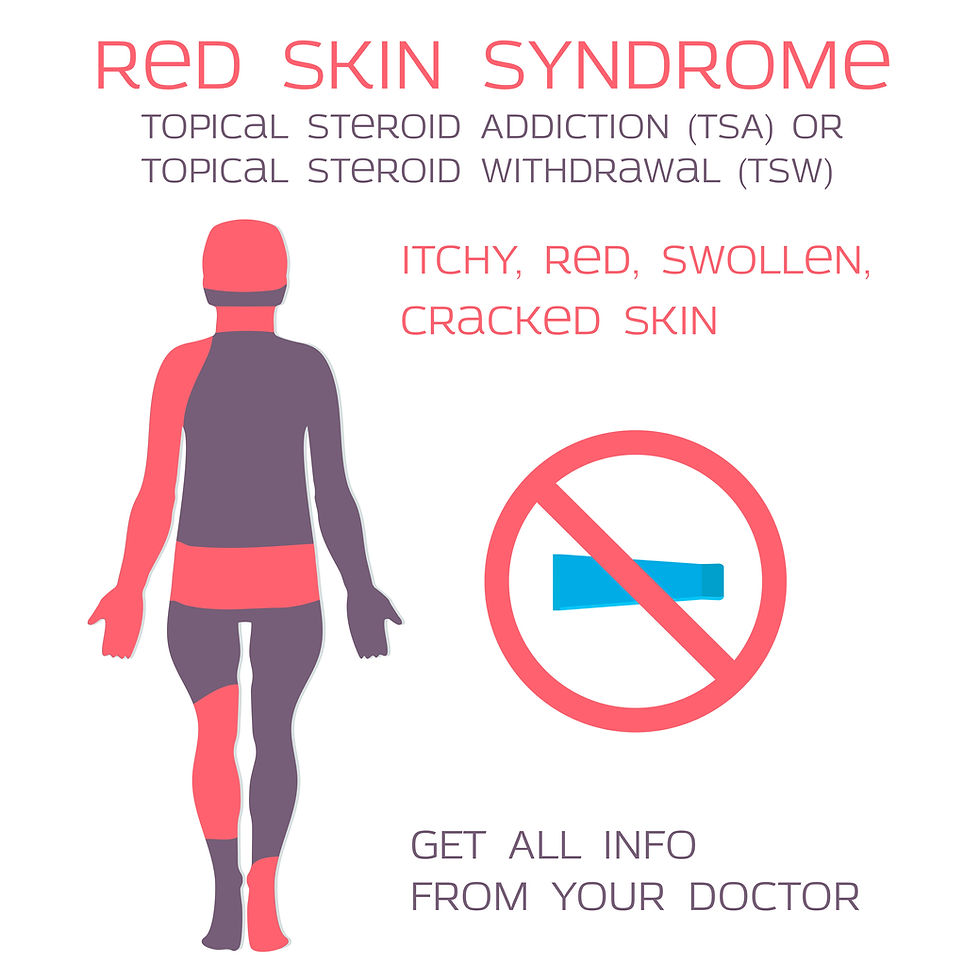
In some cases, a condition called topical steroid withdrawal, which may involve burning, stinging, or rebound flares after discontinuation
Not everyone experiences these issues. But they are part of why many families begin looking for alternatives that support the skin long-term instead of simply suppressing inflammation.
Calcineurin Inhibitors

Tacrolimus and pimecrolimus are prescription creams that reduce inflammation without being steroids. One advantage is that they do not cause skin thinning, which makes them useful for sensitive areas like the face or eyelids.
Research shows they are among the more effective non-steroid options for improving eczema symptoms. [2]
However, like all medications, they come with considerations:
They carry an FDA “black box warning” about a theoretical cancer risk. This warning was based on animal studies, and long-term human studies have not confirmed this risk — but the warning still concerns many families.
They are often more expensive than steroid creams.
Some people experience burning or stinging when first applying them, especially during the first few days of use.
Because of the warning label and early discomfort, some patients feel hesitant about using these medications — even when they may be appropriate.
The Alternative Approach: Addressing Root Causes
What if we could address the underlying drivers of eczema—microbial dysbiosis, barrier dysfunction, and immune dysregulation—rather than simply suppressing inflammation? This is the foundation of my approach using compounded topical formulations.
Zinc Pyrithione: Targeting the Microbial Trigger

Zinc pyrithione is most commonly known as the active ingredient in many anti-dandruff shampoos. But its benefits go far beyond the scalp.
In eczema, it can help in three important ways:
It reduces overgrowth of certain yeast and bacteria on the skin (including Malassezia, which can trigger flares in some people).
It helps calm inflammation.
It continues working on the skin for a period of time after application, providing extended benefit.
What Does the Research Show?
In one study comparing zinc pyrithione to a strong steroid cream (betamethasone) and a non-steroid prescription cream (tacrolimus), all three treatments improved symptoms after four weeks. [4]
But here’s what stood out: After stopping treatment, patients using zinc pyrithione continued to improve — while those using the steroid or tacrolimus experienced worsening symptoms after discontinuation. [4]
This mirrors what I often see in clinical practice. When we address the microbial imbalance that may be driving inflammation — rather than simply suppressing inflammation — we create the potential for more lasting improvement.
When Is Zinc Pyrithione Especially Helpful?
In my practice, I typically use low concentrations (0.1–0.2%), and it tends to be particularly helpful for:
Eczema that flares in oily areas (scalp, eyebrows, sides of nose, chest)
Patients with suspected yeast overgrowth
Those who have not responded well to conventional treatments
Families looking for longer-term maintenance options without steroids
Not everyone needs zinc pyrithione — but for the right patient, it can be a powerful tool.
Vitamin D: Strengthening the Skin From Within

Many children and adults with eczema have lower vitamin D levels compared to people without eczema. Research consistently shows that vitamin D levels tend to be lower in those with atopic dermatitis — especially in children. [5]
Vitamin D plays several important roles in skin health. It helps:
Strengthen the skin barrier
Calm inflammation
Support the skin’s natural defense system against microbes
Because of this, vitamin D has become an area of growing interest in eczema care.
What About Topical Vitamin D?
Most research has focused on taking vitamin D orally. However, newer research suggests that applying vitamin D directly to the skin may also help. In animal studies, topical vitamin D improved eczema-like inflammation, reduced skin thickening, and strengthened the skin barrier. [7–8]
While these early studies are promising, formulation matters. Some older research raised concerns that certain vitamin D creams — particularly stronger versions used for psoriasis — could irritate eczema-prone skin. [9–10]
However, when vitamin D is compounded at appropriate concentrations and combined thoughtfully with other supportive ingredients, it may help strengthen the skin barrier and reduce inflammation without the concerns seen in older formulations.
In My Clinical Experience
I often use topical vitamin D as part of a customized formula — especially for patients with:
Barrier dysfunction
Dry, sensitive skin
Recurrent inflammation
It tends to work best when combined with other supportive ingredients, such as zinc or vitamin B12, rather than used alone.
Vitamin B12: A Gentle Way to Calm Inflammation

Vitamin B12 may not be the first ingredient people think of for eczema, but research shows it can be surprisingly helpful.
One of the ways B12 works is by reducing substances in the skin that drive inflammation and itching. In simpler terms, it helps calm irritated skin without suppressing the immune system.
This makes it especially appealing for:
Sensitive areas like the face and eyelids
Children
Long-term use when families want to avoid stronger medications
What Does the Research Show?
Several clinical studies have looked at topical vitamin B12 in eczema — and the results are encouraging. In one placebo-controlled trial, patients using a vitamin B12 cream saw significantly greater improvement in eczema severity compared to those using a placebo cream. More than half of both doctors and patients rated the B12 treatment as “good” or “very good.” It was also very well tolerated. [11] In another study comparing a vitamin B12 cream to a standard moisturizer, the B12 cream led to substantially greater improvement in eczema severity over several months. A larger review of multiple studies also found that topical vitamin B12 significantly reduced eczema severity overall. [6]
Why I Use It in Practice
What I appreciate most about vitamin B12 is that it reduces inflammation without weakening the immune system. It doesn’t thin the skin. It doesn’t suppress the body’s defenses. When used in the right formulation, it can be a gentle but effective option, especially for patients who need ongoing support rather than short-term suppression.
Pyridoxine (Vitamin B6): Helping Repair the Skin Barrier

A healthy skin barrier is essential in eczema. When the barrier is weak, moisture escapes and irritants can get in more easily, leading to dryness, itching, and inflammation.
One important protein that helps maintain the skin barrier is called filaggrin. Many people with eczema have lower levels of filaggrin, either due to genetics or ongoing inflammation.
This is where vitamin B6 (pyridoxine) becomes interesting.
Research suggests that topical vitamin B6 may help stimulate the skin’s production of filaggrin and support the rebuilding of a stronger barrier. [12]
Vitamin B6 may also help improve the skin’s natural protective fats (such as ceramides), which are essential for keeping skin hydrated and resilient. [13]
How I Use It in Practice
In my clinical experience, vitamin B6 works best as part of a combination formula rather than on its own. I often pair it with ingredients like vitamin D and vitamin B12 in patients who need comprehensive barrier support.
For patients with chronic dryness, sensitivity, or suspected barrier weakness, it can be a helpful part of the overall strategy.
Niacinamide (Vitamin B3): A Powerful Skin Supporter

Niacinamide — also known as vitamin B3 — is one of my favorite ingredients for eczema-prone skin because it does several helpful things at once.
It can:
Calm inflammation
Reduce itching
Strengthen the skin barrier
Help balance the skin’s natural environment
In simple terms, niacinamide helps the skin hold onto moisture while becoming more resilient and less reactive.
What Does the Research Show?
In a 2023 clinical trial of adults with mild eczema, moisturizers containing niacinamide significantly improved:
Eczema severity
Itching
Skin barrier function
Overall quality of life
Compared to standard moisturizers, niacinamide-containing creams helped reduce water loss from the skin — which is a key problem in eczema. [18]
Earlier studies have shown similar results. When compared to basic petroleum-based moisturizers, niacinamide was more effective at improving hydration and reducing water loss from dry, eczema-prone skin. [19]
Research reviews also suggest that certain topical vitamins — including B vitamins — can play a supportive role in eczema management. [3]
Why I Use It in Practice
Niacinamide is generally very well tolerated and has been used safely in skincare for decades. [20] I often include it in formulations for patients who struggle with:
Persistent dryness
Itching
Skin that feels thin, fragile, or reactive
It works particularly well alongside other barrier-supporting ingredients, helping strengthen the skin over time rather than simply calming it temporarily.
Additional Compounded Options

While topical vitamins form the foundation of my approach, some patients need additional support depending on their symptoms. Eczema is not one-size-fits-all, and neither is treatment.
Topical Naltrexone (For Severe Itching)
For patients who struggle with intense itching, I sometimes consider topical naltrexone.
Unlike antihistamines, which target allergy-related pathways, naltrexone works through a different mechanism in the skin that can help reduce itch signals more directly.
In clinical research, topical naltrexone significantly reduced itching in patients with eczema and worked relatively quickly compared to placebo. [21]
In practice, I reserve this option for patients with severe or persistent itching that hasn’t responded to more foundational treatments.
The Power of Combination Therapy

In my clinical experience, no single ingredient works for everyone.
Eczema is complex. That’s why I rarely rely on just one topical ingredient. Instead, I combine ingredients strategically based on what seems to be driving that person’s symptoms.
Rather than using a one-size-fits-all cream, I tailor formulations to the pattern I see.
Here are some examples:
B12 + Niacinamide:
For active inflammation + itch
These ingredients work together to calm inflammation and reduce itching — without suppressing the immune system.
Zinc Pyrithione + Vitamin D:
For eczema that flares in oily areas (scalp, face, chest)
This approach helps address yeast or microbial overgrowth while also supporting barrier repair.
B12 + B6 + Vitamin D + Zinc Pyrithione:
For more complex or persistent cases
When multiple drivers are involved, a multi-ingredient strategy may be necessary.
Add Naltrexone:
For severe itching
For patients with intense itching, an additional ingredient may be used to help calm itch signals more directly.
Can You Find These Ingredients in Regular Skincare Products?

After learning about ingredients like vitamin B12, vitamin D, pyridoxine, niacinamide, and zinc pyrithione, a common question is: “Can I just buy a cream with these ingredients?”
The answer is: sometimes — but it’s not always that simple.
Some of these ingredients do appear in commercial skincare products. For example, niacinamide is widely used in moisturizers, and zinc pyrithione has historically been used in anti-dandruff shampoos.
However, commercial products are typically designed for general skincare, not for the targeted treatment of eczema. That creates a few important limitations.
Concentration Matters
Many studies on topical nutrients use specific concentrations that are not commonly found in over-the-counter skincare. Commercial products often contain smaller amounts of active ingredients or include them as secondary ingredients in complex formulas. When we compound a topical formulation, we can adjust the concentration intentionally based on the patient’s needs.
Combination Matters
Another challenge is that most commercial creams contain only one active ingredient. But eczema is rarely caused by a single factor. In many patients, multiple processes are involved at the same time, such as:
skin barrier weakness
microbial imbalance
inflammation
Compounded formulations allow us to combine ingredients strategically, targeting several drivers at once.
Formulation Matters
The base cream or ointment used in a topical formulation is just as important as the active ingredients themselves. Many eczema patients react to fragrances, preservatives, or emulsifiers commonly found in commercial skincare products. Compounded formulations allow us to choose bases that are simpler and often better tolerated by sensitive skin.
Another important consideration is the type of oils used in the formulation. For example, some patients have eczema that is aggravated by Malassezia, a yeast that naturally lives on the skin but can become overgrown in certain environments. Malassezia feeds on specific fatty acids found in many plant oils and cosmetic ingredients. If a topical product contains oils that Malassezia can metabolize, it may unintentionally worsen inflammation or trigger flares in these patients. When formulating compounded topicals, we can select oils and bases that are less likely to feed Malassezia, helping reduce this risk while still supporting skin barrier repair.
This level of customization is difficult to achieve with mass-produced skincare products designed for general use.
Personalization Matters
Perhaps most importantly, eczema varies significantly from person to person. Some patients have primarily barrier dysfunction, while others have more microbial-driven inflammation. In many cases, both are involved. Compounded formulations allow us to tailor the ingredients to the individual, rather than relying on a one-size-fits-all product.
In my practice, I typically begin with an Eczema Clarity Visit, where we review symptom patterns, triggers, and previous treatments to better understand what may be driving the eczema. From there, we can determine whether customized topical formulations or other strategies may be helpful.
A Real Patient Story: From Severe Eczema to Clear Skin

One of the most meaningful parts of my work is watching a child go from constant discomfort to finally feeling at ease in their own skin.
I want to share one story that illustrates what can happen when we focus on root causes — not just symptom suppression.
The Challenge
A young child came to see me with significant eczema affecting multiple areas of the body, including the inner arms and ankles.
The skin was:
Bright red
Thickened from chronic inflammation
Covered in scaling
Marked with scratches from constant itching
The parents described sleepless nights, frequent flares, and the emotional toll of watching their child suffer.
If you are a parent of a child with eczema, you understand that feeling — the exhaustion, the worry, the constant searching for answers.
The Approach
Instead of immediately relying on topical steroids, we took a more comprehensive approach.
We focused on:
Topical nutrients (Vitamin D, B12, and B6) to calm inflammation and strengthen the skin barrier
Dietary adjustments to remove inflammatory triggers
Gut and microbiome support to address underlying drivers
This was not about finding a “better cream.”It was about supporting the body’s ability to heal.
The Results
The changes were visible quickly.
Day 1: Severe redness, scaling, and excoriations
Day 4: Noticeable reduction in redness
Day 7: Continued improvement, smoother texture
Day 14: Near-complete resolution in treated areas
But what mattered most was not just the short-term improvement. Over time, from late 2020 through early 2022, this child went from widespread, severe eczema to being completely clear. No rebound flares. No ongoing steroid dependence. Just healthy skin.
This case highlights something important: When we only suppress inflammation, symptoms often return. When we address barrier function, microbial balance, and internal triggers, we create the possibility for lasting change.
Watch this patient's story here:
Are Alternative Topicals Right For You?

Alternative topical treatments may be a good fit if you:
Want to reduce or avoid long-term steroid use
Are treating sensitive areas like the face, eyelids, or skin folds
Feel stuck in the “apply → improve → flare” cycle
Need a long-term maintenance strategy rather than short-term suppression
Have eczema that flares in oily areas (like the scalp or around the nose)
Have tried conventional treatments but haven’t found lasting relief
Many of the families I work with simply want a more thoughtful, root-cause approach — not just another prescription.
How Do We Know What’s Driving Your Eczema?
One of the most common questions I hear is: “How do I know which ingredient is right for me?”
The truth is, eczema doesn’t look the same in everyone, and it doesn’t have the same root cause. In some people, microbial imbalance plays a major role. In others, barrier dysfunction is the primary issue. For some, immune overactivation or gut imbalances are key contributors. This is where personalized evaluation becomes important.
In more complex or persistent cases, I may recommend targeted testing, including advanced skin or gut microbiome testing, to better understand:
Bacterial imbalances
Yeast overgrowth
Staphylococcus dominance
Gut patterns that may be contributing to skin inflammation
Toxic overload
Hormonal imbalances
And more...
Not everyone needs testing. But when appropriate, it can reduce guesswork and help us move forward more strategically.
If You’re Feeling Stuck

If you’ve been cycling through creams without lasting improvement, you’re not alone. Sometimes the next step isn’t a new product, it’s clarity.
In my practice, during an Eczema Clarity Visit, I take a closer look at healthy history, symptom patterns, and potential drivers. From there, we discuss whether customized topicals, dietary changes, or targeted testing make sense for you.
The goal is not just short-term relief. It’s a strategy designed for long-term skin health. If that feels aligned, you can learn more about scheduling a visit here.
We're Going Live!
We are going live to discuss this topic on Sunday, March 8 at 4:30 pm PST! Watch the live or check out the replay here:
About the Author:

Dr. Diane Angela Fong, ND, is the CEO and founder of Cleanbody, a wellness company dedicated to treating and preventing chronic disease. She is the creator of the Cleanbody Method, which follows a three-step process: Evaluate (digging into the root causes of chronic disease using lab testing and other evaluation tools), Optimize (enhancing health foundations by addressing nutrition, lifestyle, and toxic exposures), and Support (optimizing organ functions through healing protocols).
References
Lax SJ, Van Vogt E, Candy B, et al. Topical Anti-Inflammatory Treatments for Eczema: A Cochrane Systematic Review and Network Meta-Analysis. Clinical and Experimental Allergy. 2024;54(12):960-972.
Chu DK, Chu AWL, Rayner DG, et al. Topical Treatments for Atopic Dermatitis (Eczema): Systematic Review and Network Meta-Analysis of Randomized Trials. The Journal of Allergy and Clinical Immunology. 2023;152(6):1493-1519.
Maarouf M, Vaughn AR, Shi VY. Topical Micronutrients in Atopic Dermatitis-an Evidence-Based Review. Dermatologic Therapy. 2018;31(5):e12659.
Shin H, Kwon OS, Won CH, et al. Clinical Efficacies of Topical Agents for the Treatment of Seborrheic Dermatitis of the Scalp: A Comparative Study. The Journal of Dermatology. 2009;36(3):131-7.
Kim MJ, Kim SN, Lee YW, Choe YB, Ahn KJ. Vitamin D Status and Efficacy of Vitamin D Supplementation in Atopic Dermatitis: A Systematic Review and Meta-Analysis. Nutrients. 2016;8(12):E789.
Zhu Z, Yang Z, Wang C, Liu H. Assessment of the Effectiveness of Vitamin Supplement in Treating Eczema: A Systematic Review and Meta-Analysis. Evidence-Based Complementary and Alternative Medicine. 2019;2019:6956034.
Umehara Y, Trujillo-Paez JV, Yue H, et al. Calcitriol, an Active Form of Vitamin D3, Mitigates Skin Barrier Dysfunction in Atopic Dermatitis NC/Nga Mice. International Journal of Molecular Sciences. 2023;24(11):9347.
Alosaimi NS, Sattar Ahmad MAA, Alkreathy HM, Ali AS, Khan LM. Pharmacological Basis of the Putative Therapeutic Effect of Topical Vitamin D3 on the Experimental Model of Atopic Dermatitis in Mice. European Review for Medical and Pharmacological Sciences. 2022;26(18):6827-6836.
Li M, Hener P, Zhang Z, et al. Topical Vitamin D3 and Low-Calcemic Analogs Induce Thymic Stromal Lymphopoietin in Mouse Keratinocytes and Trigger an Atopic Dermatitis. Proceedings of the National Academy of Sciences of the United States of America. 2006;103(31):11736-41.
Pacheco-Gonzalez RM, Garcia-Marcos PW, Garcia-Marcos L. Vitamin D and Atopic Dermatitis. Mini Reviews in Medicinal Chemistry. 2015;15(11):927-34.
Stücker M, Pieck C, Stoerb C, et al. Topical Vitamin B12--a New Therapeutic Approach in Atopic Dermatitis-Evaluation of Efficacy and Tolerability in a Randomized Placebo-Controlled Multicentre Clinical Trial. The British Journal of Dermatology. 2004;150(5):977-83.
Fujishiro M, Yahagi S, Takemi S, et al. Pyridoxine Stimulates Filaggrin Production in Human Epidermal Keratinocytes. Molecular Biology Reports. 2021;48(7):5513-5518.
Mizutani T, Yamawaki Y, Okano Y, Masaki H. Pyridoxine (VB6) Restores the Down-Regulation of Serine Palmitoyltransferase mRNA Expression in Keratinocytes Cultured in Highly Oxidative Conditions Through Enhancement of the Intracellular Antioxidant System. Experimental Dermatology. 2019;28 Suppl 1:43-49.
Mabin DC, Hollis S, Lockwood J, David TJ. Pyridoxine in Atopic Dermatitis. The British Journal of Dermatology. 1995;133(5):764-7.
Wohlrab J, Kreft D. Niacinamide - Mechanisms of Action and Its Topical Use in Dermatology. Skin Pharmacology and Physiology. 2014;27(6):311-5.
Grange PA, Raingeaud J, Calvez V, Dupin N. Nicotinamide Inhibits Propionibacterium Acnes-Induced IL-8 Production in Keratinocytes Through the NF-kappaB and MAPK Pathways. Journal of Dermatological Science. 2009;56(2):106-12.
Mohammed D, Crowther JM, Matts PJ, Hadgraft J, Lane ME. Influence of Niacinamide Containing Formulations on the Molecular and Biophysical Properties of the Stratum Corneum. International Journal of Pharmaceutics. 2013;441(1-2):192-201.
Zhu JR, Wang J, Wang SS. A Single-Center, Randomized, Controlled Study on the Efficacy of Niacinamide-Containing Body Emollients Combined With Cleansing Gel in the Treatment of Mild Atopic Dermatitis. Skin Research and Technology. 2023;29(9):e13475.
Soma Y, Kashima M, Imaizumi A, et al. Moisturizing Effects of Topical Nicotinamide on Atopic Dry Skin. International Journal of Dermatology. 2005;44(3):197-202.
Kapoor K, S S, Begum RF, S AS, N A. Exploring Niacinamide as a Multifunctional Agent for Skin Health and Rejuvenation. Current Pharmaceutical Biotechnology. 2025;:CPB-EPUB-151051.
Bigliardi PL, Stammer H, Jost G, et al. Treatment of Pruritus With Topically Applied Opiate Receptor Antagonist. Journal of the American Academy of Dermatology. 2007;56(6):979-88.
Disclaimer: The information provided in this blog post is for educational and informational purposes only. It is not intended to be a substitute for professional medical advice, diagnosis, or treatment. Always seek the advice of your physician or other qualified healthcare provider with any questions you may have regarding a medical condition or treatment and before undertaking a new health care regimen. Never disregard professional medical advice or delay in seeking it because of something you have read on this website.
Please note that due to state and federal regulations governing compounded medications, I am only able to provide these customized topical formulations to patients located in California. If you are located outside California and are interested in exploring these alternative treatments, I am happy to assist you in finding a qualified practitioner in your area who may be able to compound similar formulations for you.





Comments